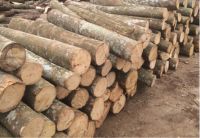
Timber intake
Plantation logs and sawn timber arrive with legal-origin documents. Every lot is tagged for traceability.
Every step from raw timber to a loaded container happens under one roof, so we control moisture, quality and delivery dates ourselves instead of relying on subcontractors.
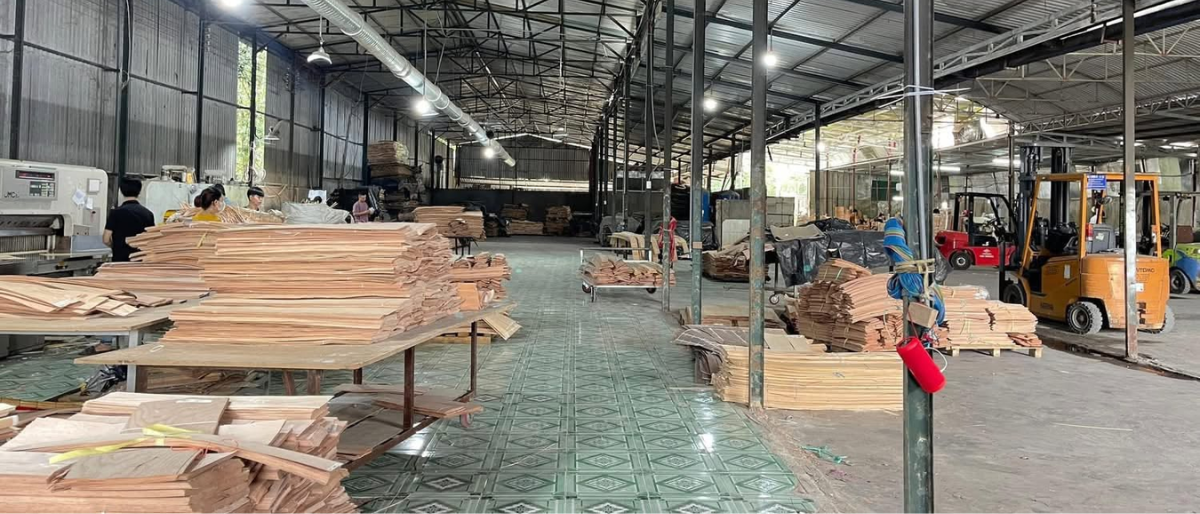
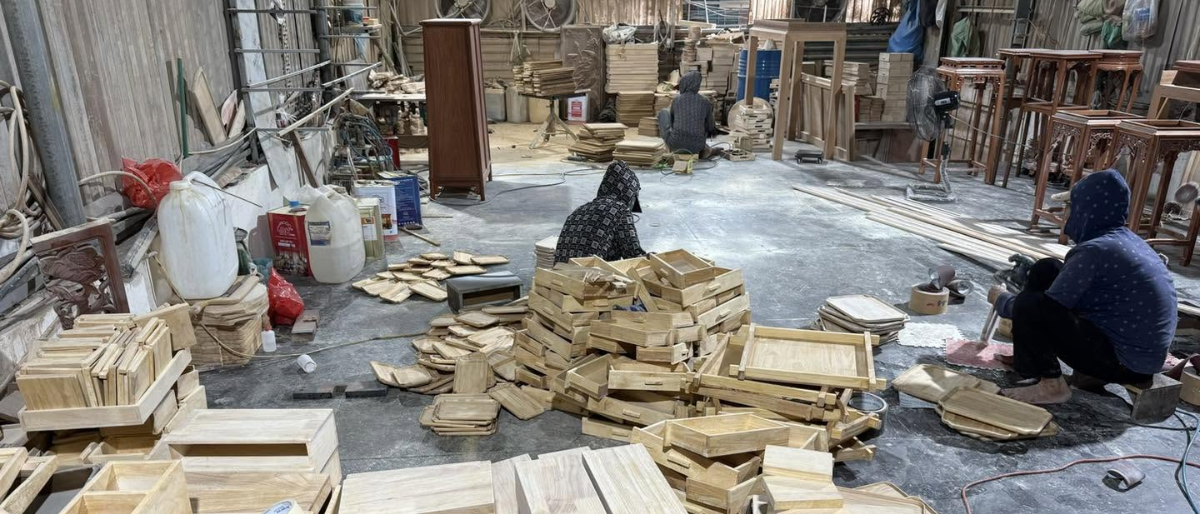
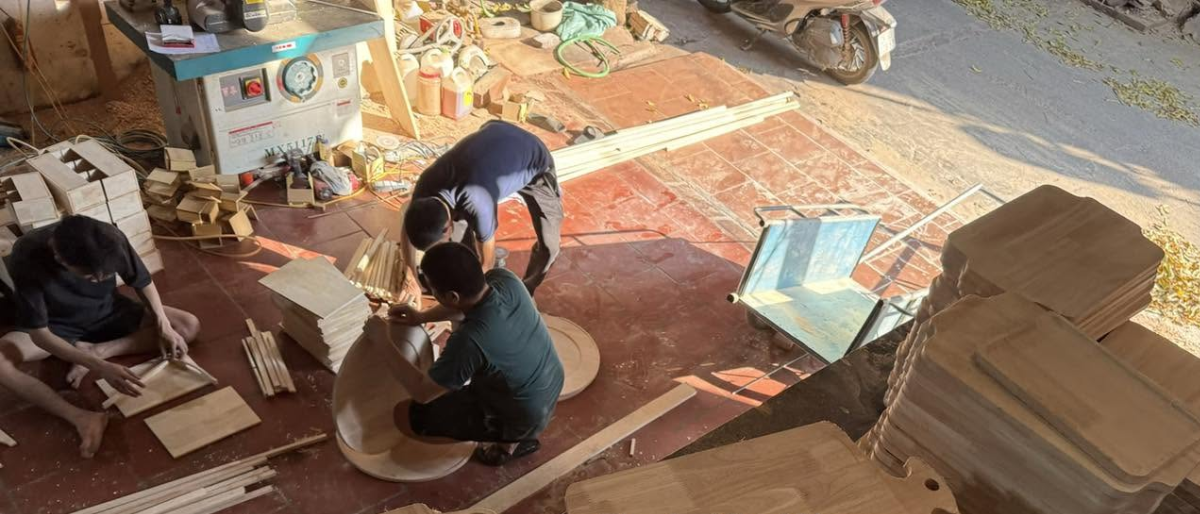
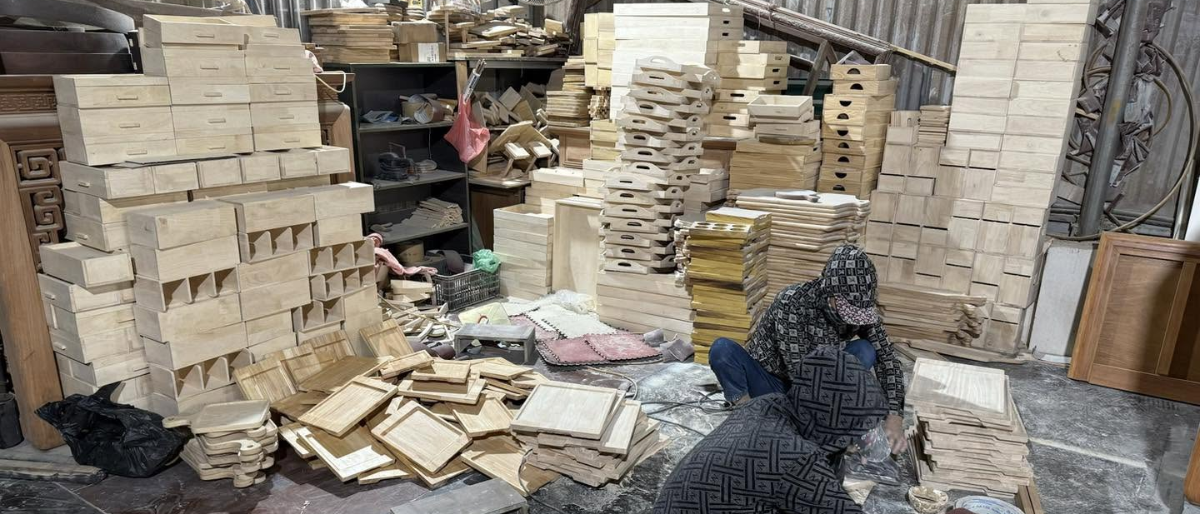
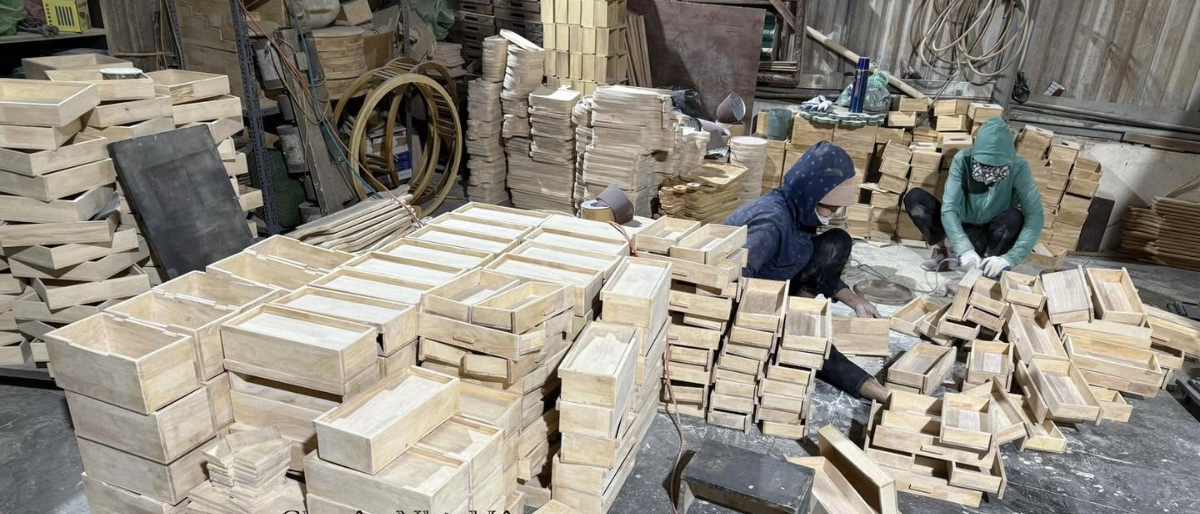
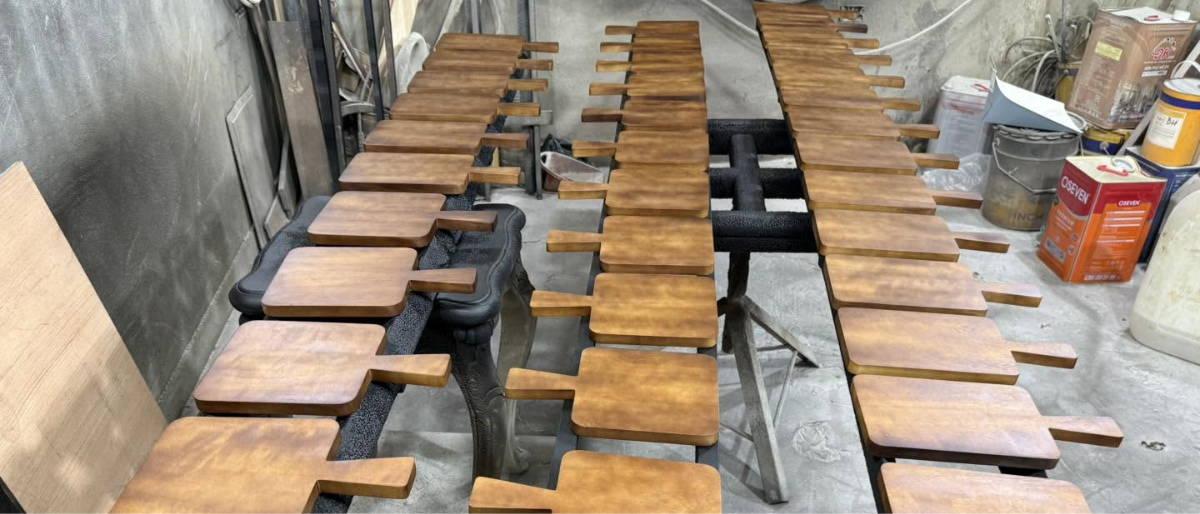
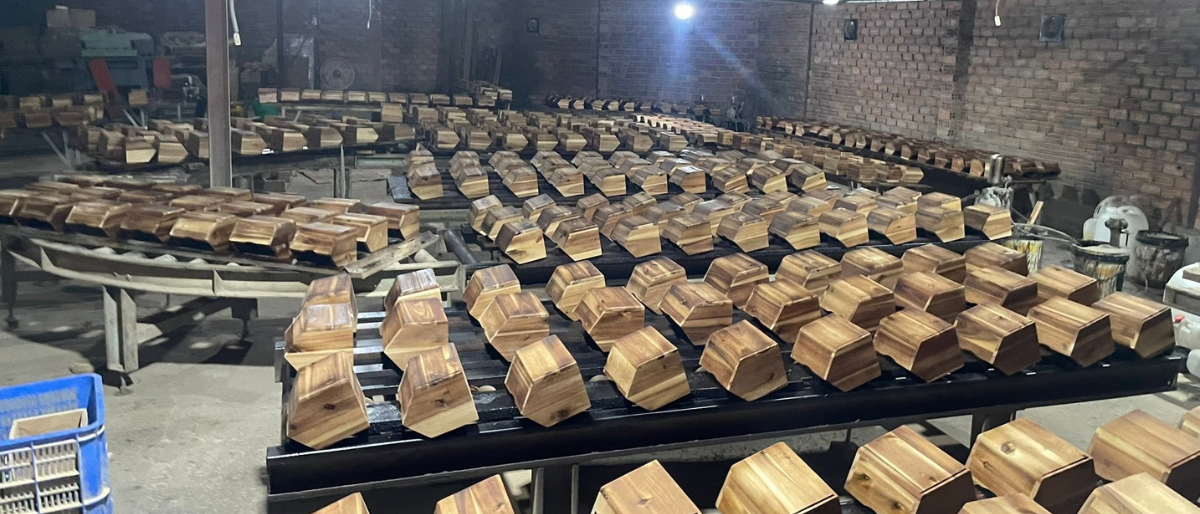
Six stages, one site. Each lot of timber is tagged on arrival and followed through to the carton it ships in.
Plantation logs and sawn timber arrive with legal-origin documents. Every lot is tagged for traceability.
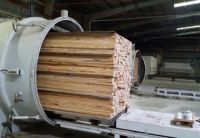
Four chambers run 10–14 day cycles. Moisture is checked again before any machining starts.
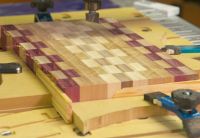
CNC routing, edge-gluing and end-grain lines cut every piece to your drawing.
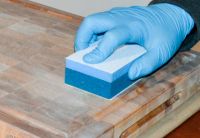
Wide-belt and hand sanding through several grits for a smooth, food-contact surface.
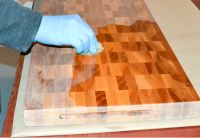
Food-safe oil, beeswax or lacquer, then laser engraving or hot stamping of your logo.
In-line checks, a final AQL inspection, export cartons and container loading on site.
Enough equipment to run several customer orders in parallel, from timber drying to finishing.
| Equipment | Used for |
|---|---|
| Kiln-drying chambers | Drying timber to 8–12% moisture |
| CNC routers | Shapes, grooves, handles and templates |
| Edge-glue presses | Edge-grain and end-grain panels |
| Wide-belt sanders | Flat surface sanding |
| Laser engravers | Logos, text and patterns |
| Finishing lines | Oiling, waxing and lacquer |
| QC lab | Moisture, dimension and finish checks |
Wood is a renewable material when it is sourced and used well. These are the practices we run every day.
Acacia and rubberwood come from Vietnamese plantations that are replanted after harvest.
Offcuts become coasters and small items; sawdust and shavings fuel our drying kilns.
Food-safe oils, beeswax and water-based, low-VOC lacquers instead of solvent coatings.
Species, origin and harvest documents for every lot, ready for EUDR and Lacey Act checks.